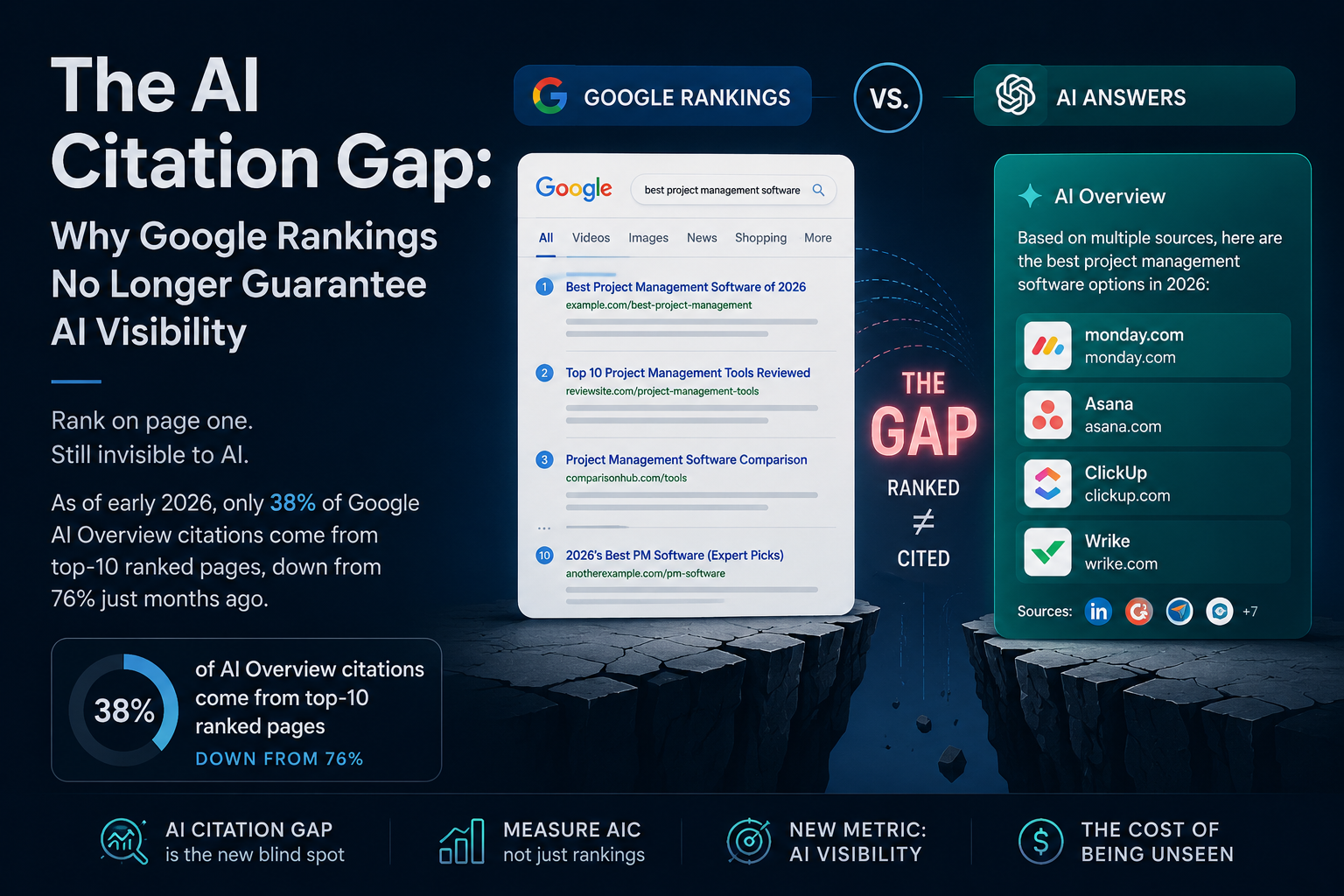
The AI Citation Gap Is Costing You Business — And Most Brands Don't Even Know It
We asked ChatGPT five questions on May 16, 2026 — questions your customers are already typing into AI systems right now. The answers revealed something every brand needs to understand: ranking on Google and being cited by AI are no longer the same thing. As of early 2026, only 38% of Google AI Overview citations come from top-10 ranked pages, down from 76% just months ago. This deep-dive research analysis breaks down the AI citation gap, the rise of AIC as a metric, how to measure AI search visibility, and why your current SEO benchmark report is only telling you half the story.
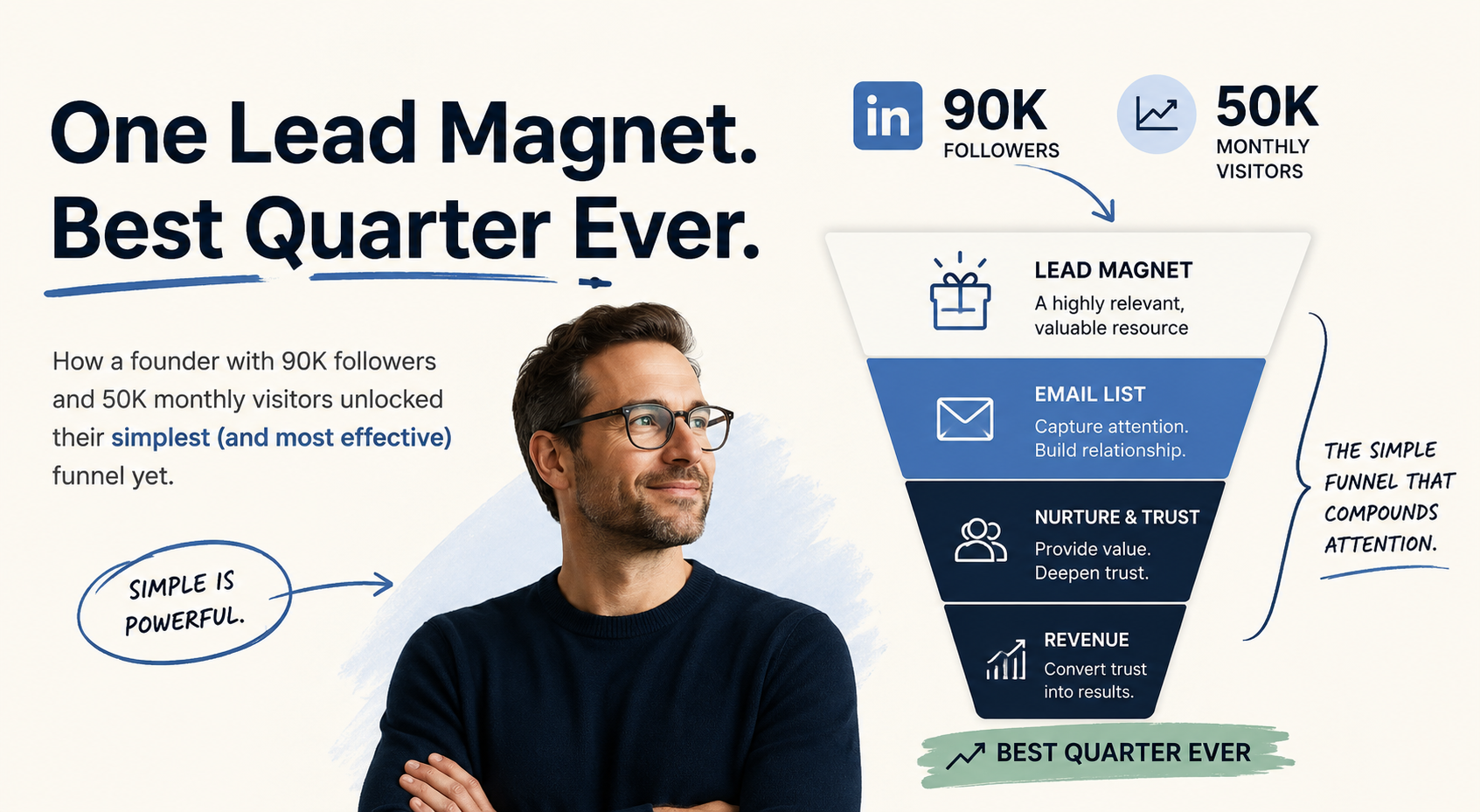
The Simplest Thing a Founder With 90K Followers Did to Have Their Best Quarter Ever
Most founder-led brands have already done the hard part — building a real audience, earning genuine trust, driving consistent traffic. What they're missing isn't more content or a bigger ad budget. It's a mechanism to capture and compound all of that attention. One founder with 90,000 LinkedIn followers and 50,000 monthly visitors just had their best quarter ever after adding a single well-built lead magnet. Here's why it worked — and why the funnel doesn't need to be nearly as complicated as most people make it.
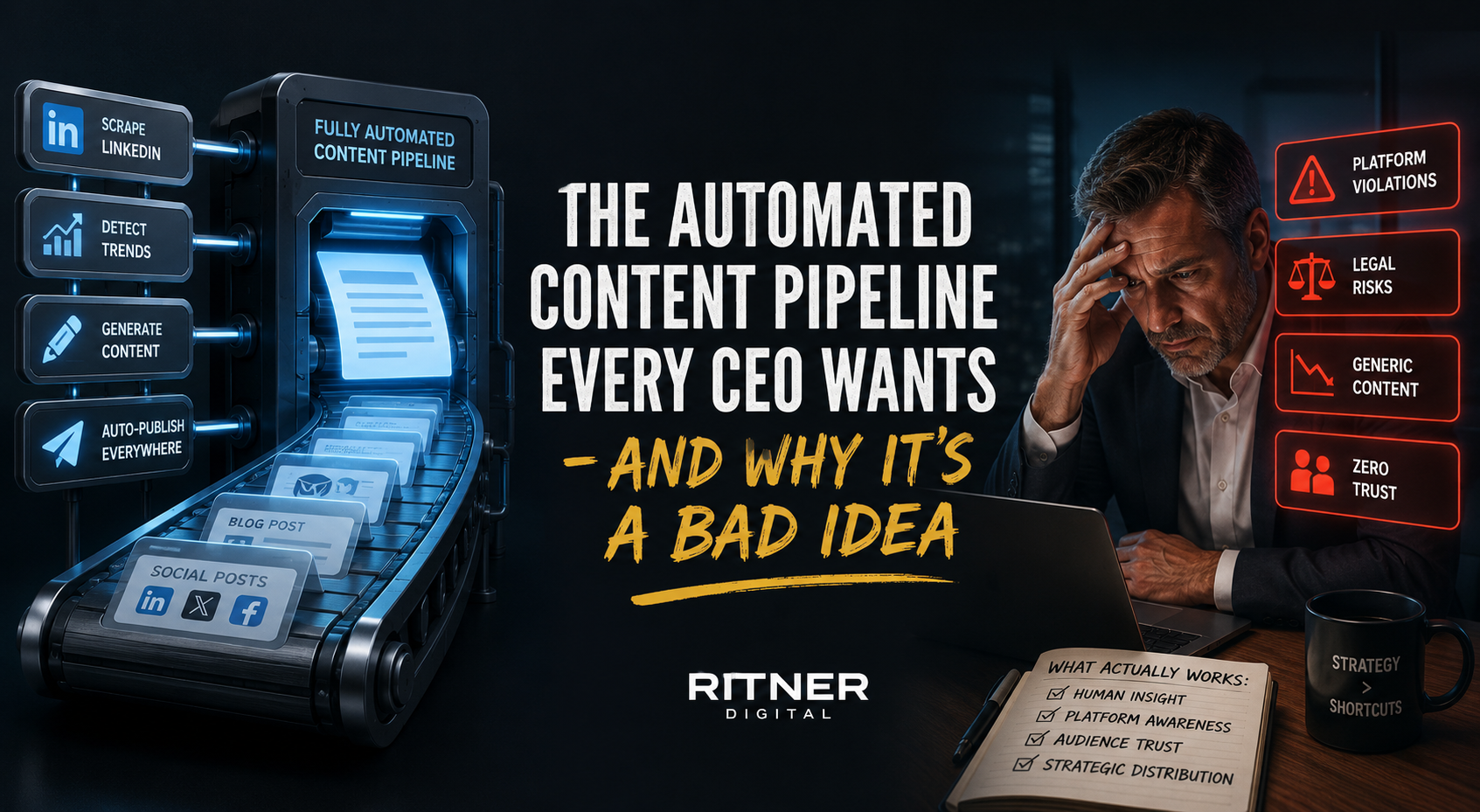
The "Genius" Idea Every CEO Keeps Pitching — And Why It Doesn't Work
There's an idea making the rounds in every boardroom and strategy session right now: build a tool that scrapes LinkedIn, detects what's trending, and automatically writes and distributes your newsletter, blog, and social content. CEOs love it. Solutions architects pitch it. And it fundamentally misunderstands how content, platforms, and audiences actually work in 2026. Here's the honest breakdown of why it fails — and what a smarter version of this idea actually looks like.
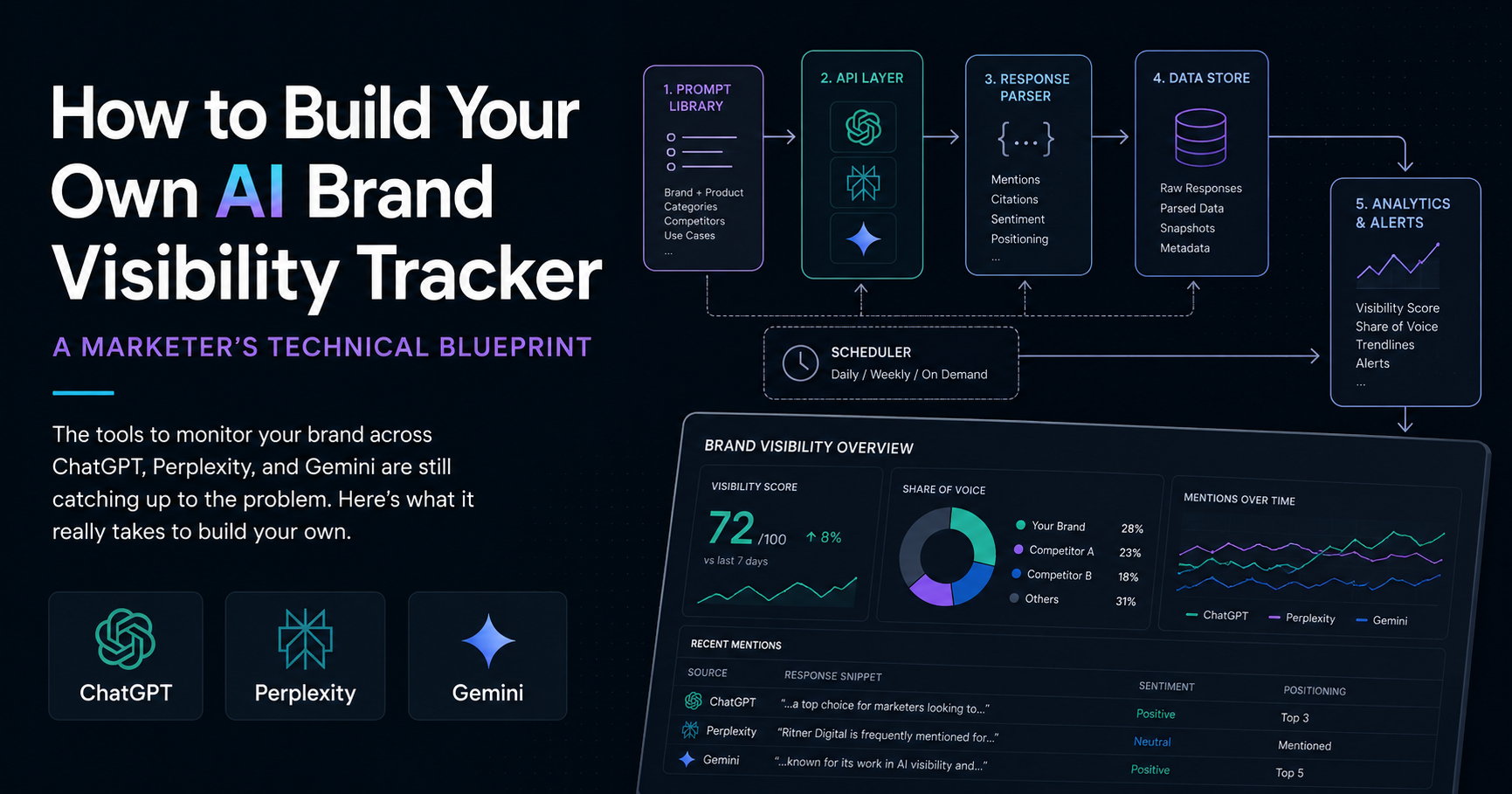
How a Marketer Would Actually Build Their Own AI Visibility Tracker (And Why It's Harder Than It Sounds)
The tools to monitor your brand across ChatGPT, Perplexity, and Gemini are still catching up to the problem. So what would it actually take to build your own? From prompt libraries and API access to parsing logic and cost estimates, here's an honest technical blueprint for marketers who want to understand how AI visibility tracking works under the hood — and what makes it harder than it looks.
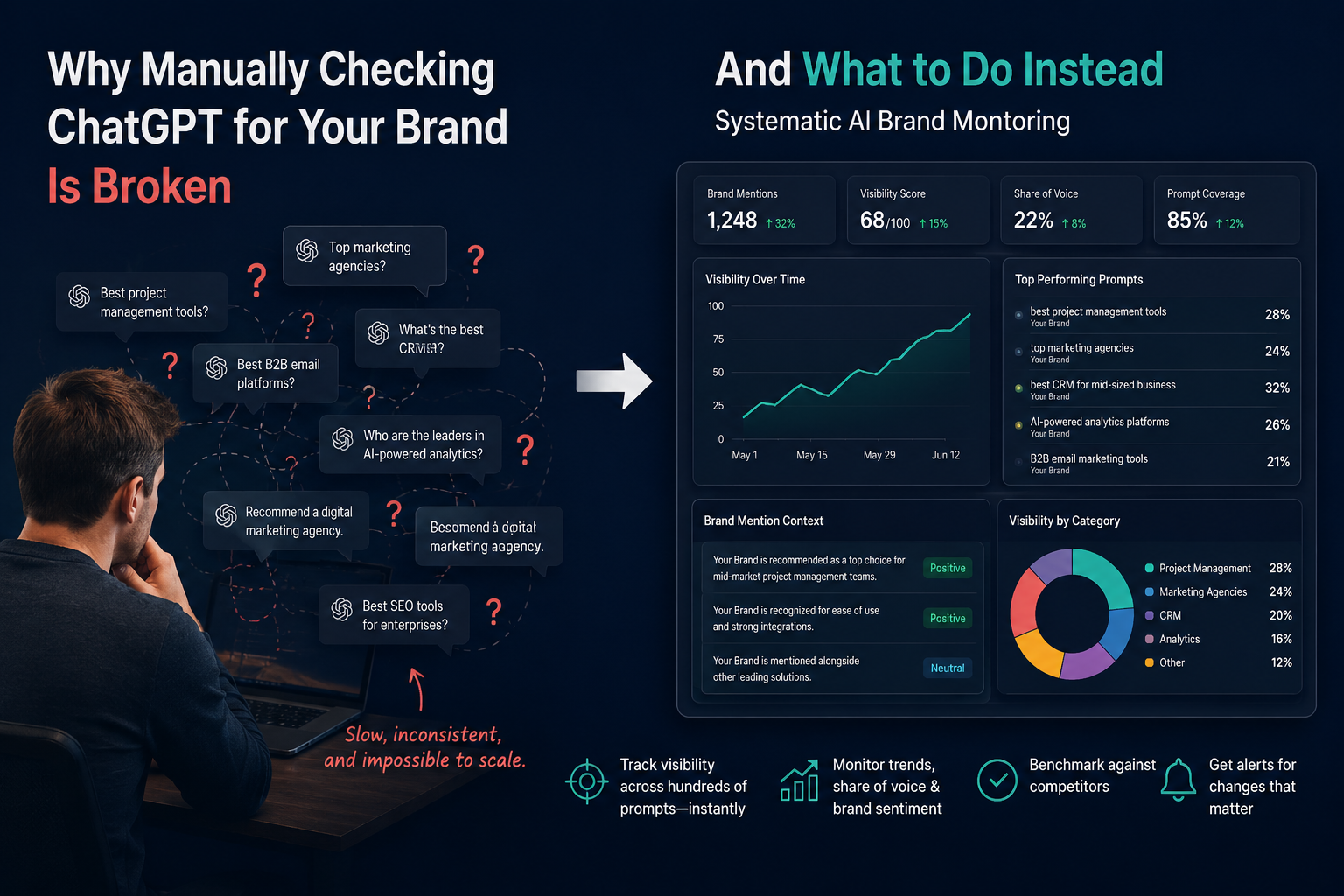
You Shouldn't Have to Play 20 Questions With ChatGPT Just to Know If Your Brand Shows Up There
Your brand is either showing up in AI-generated answers or it isn't — and right now, most marketers have no reliable way to know which. While teams are running sophisticated SEO reporting stacks, the majority are still checking their AI visibility by manually typing questions into ChatGPT and hoping for the best. Here's why that's not a strategy, and what actually needs to change.
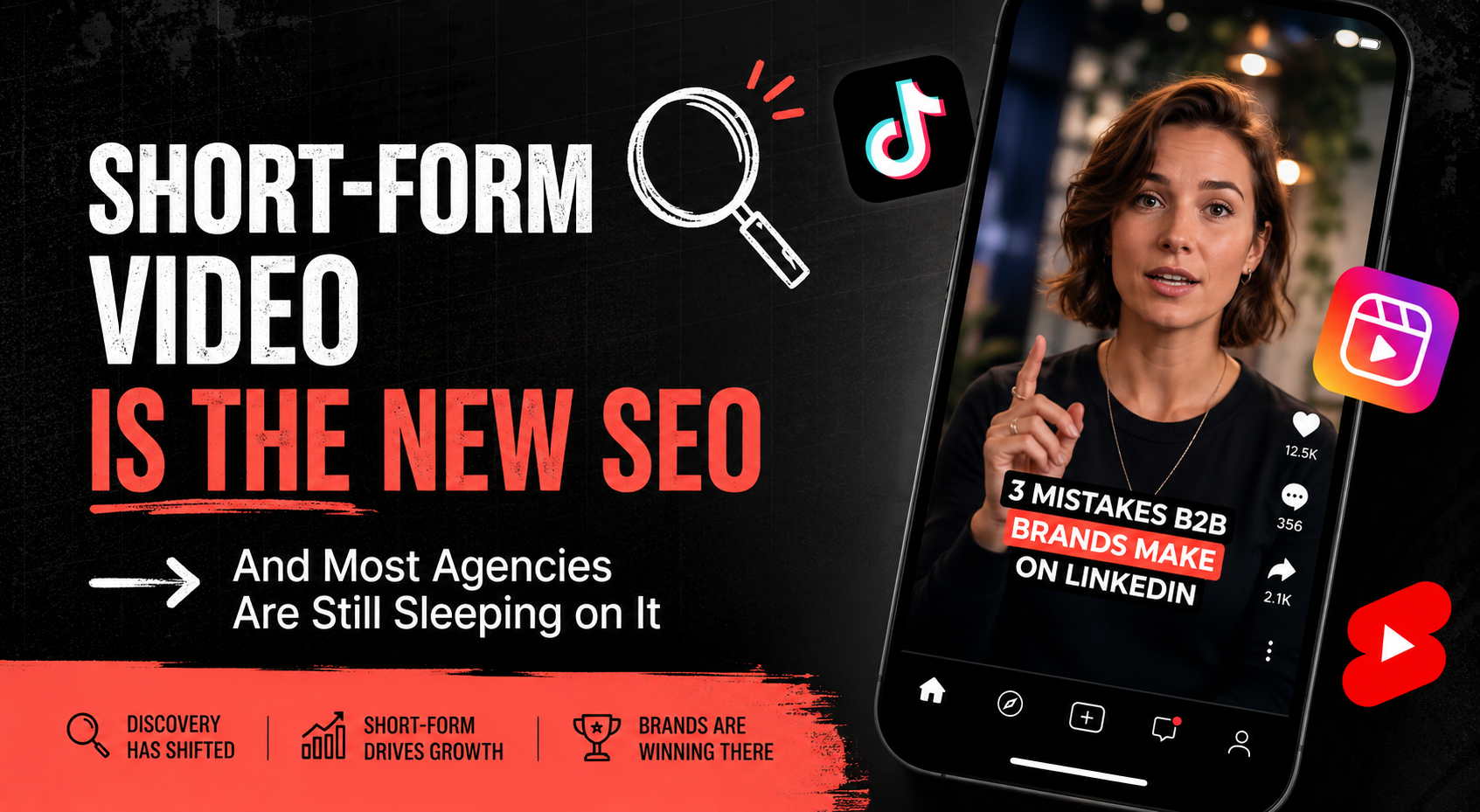
Short-Form Video Is the New SEO — And Most Agencies Are Still Asleep at the Wheel
Discovery behavior has fundamentally shifted. Nearly half of U.S. consumers now use TikTok as a search engine, and brands across auto, legal, media, and SaaS have already figured out how to win there. So why are so many marketing agencies still hesitant to treat short-form video as a serious channel — and what does it look like when brands actually get it right?
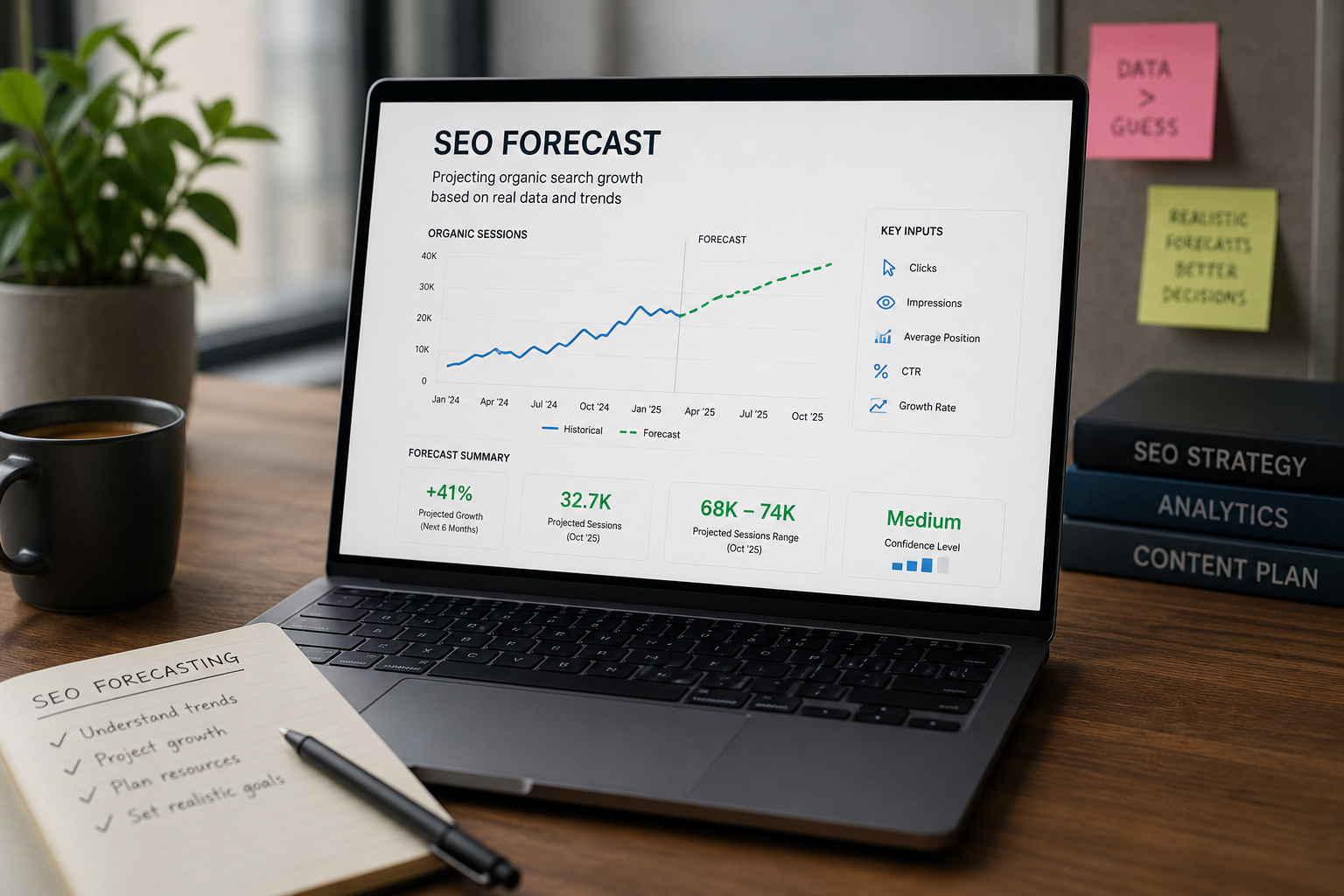
What Is SEO Forecasting? A Plain-English Guide to Predicting Organic Search Growth
Most businesses investing in SEO eventually ask the same question: when will we actually see results? SEO forecasting is the discipline that answers that question with data instead of guesses. It takes your real click trends, impression volume, ranking positions, and growth rates and projects where your organic search performance is headed — and when. This guide covers exactly how SEO forecasting works, what data goes into it, how forecasts are built, where they are reliable, and where they have real limits. No hockey sticks. No guarantees. Just a plain-English explanation of one of the most underused planning tools in digital marketing.
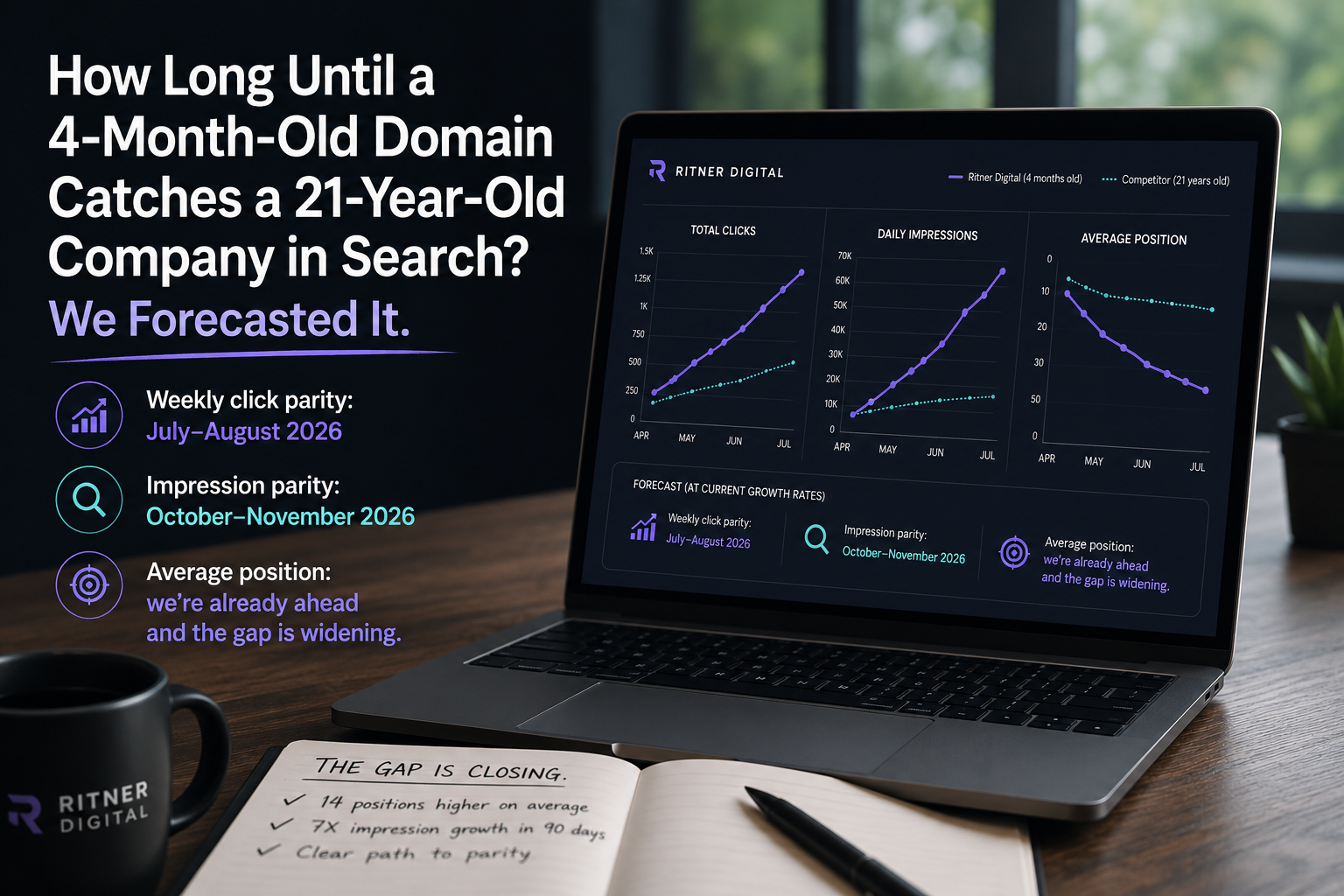
How Long Will It Take a 4-Month-Old Domain to Catch a 21-Year-Old Company in Search? We Did the Math.
Ritner Digital is four months old. The company we're forecasting against has been in business since 2004. Right now they lead us in total clicks and daily impressions — but we already rank 14 positions higher on average, our impression volume has grown 7x in 90 days, and theirs hasn't moved. In this post we compare both sites across every key metric, run the math on current growth trajectories, and forecast exactly when Ritner Digital closes each gap. Weekly click parity: July–August 2026. Impression parity: October–November 2026. Average position: we're already ahead and the gap is widening.
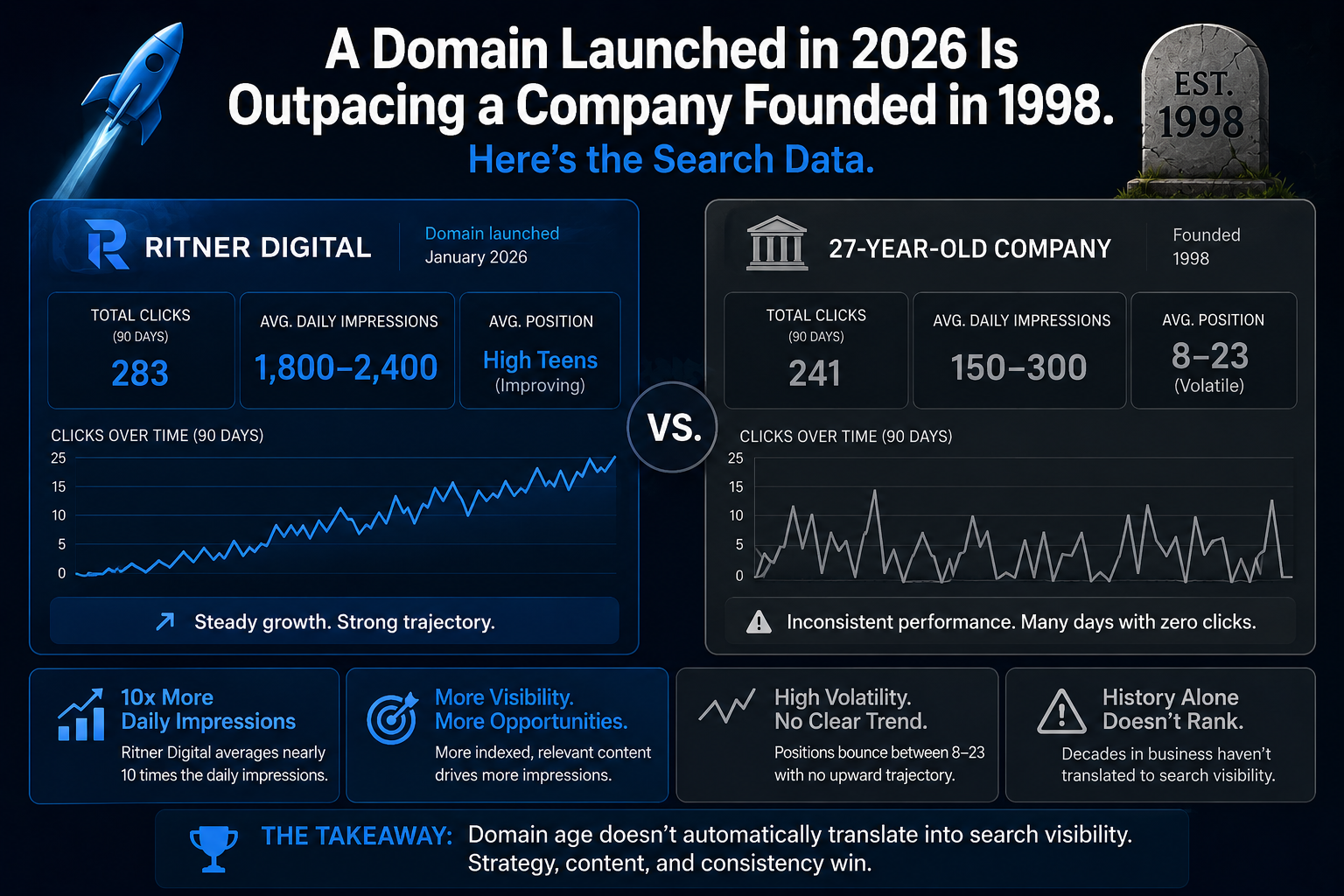
We Launched in January 2026. We're Already Outpacing a Company Founded in 1998. Here's the Data.
Ritner Digital didn't exist as a domain until January 2026. The company we're now outpacing in organic search has been in business since 1998. Over the same 90-day window, we generated 283 clicks and nearly 10 times the daily impressions of a 27-year-old organization that has deeply underinvested in SEO. This post shows the exact data from both sites, explains why domain age doesn't automatically translate into search visibility, and makes the case for why the cost of continued SEO inaction compounds every single month.
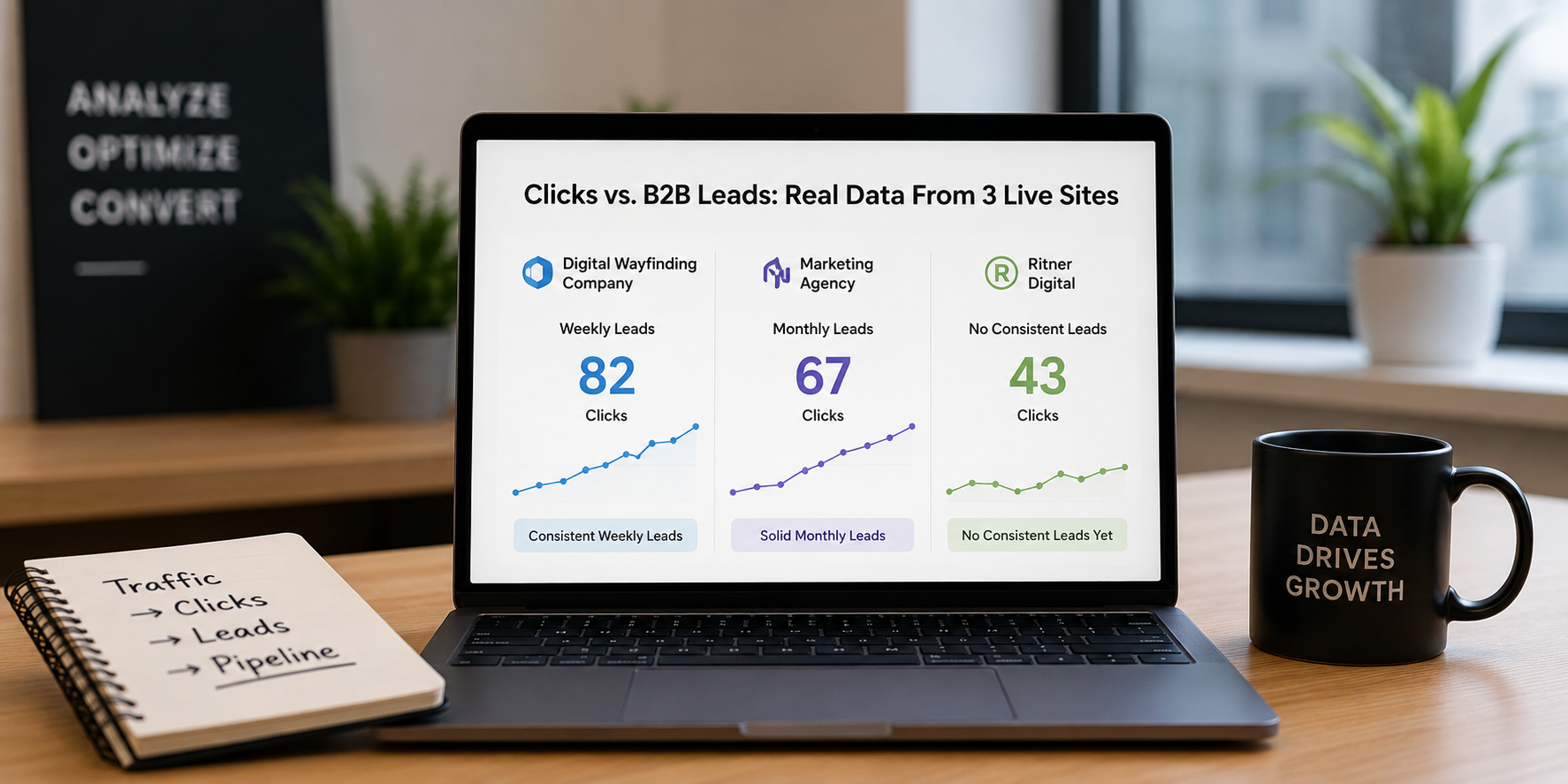
How Many Clicks Does It Actually Take to Generate Leads? Real Data From Three Live Sites — Including Our Own
Every business investing in SEO wants to know the same thing: when do clicks actually turn into leads? We pulled real Google Search Console data from three live sites — a digital wayfinding company seeing weekly leads at 82 clicks, a marketing agency seeing solid monthly leads at 67 clicks, and Ritner Digital's own site at 43 clicks with no consistent leads yet. Here's exactly what the numbers say, and what it means for your pipeline.
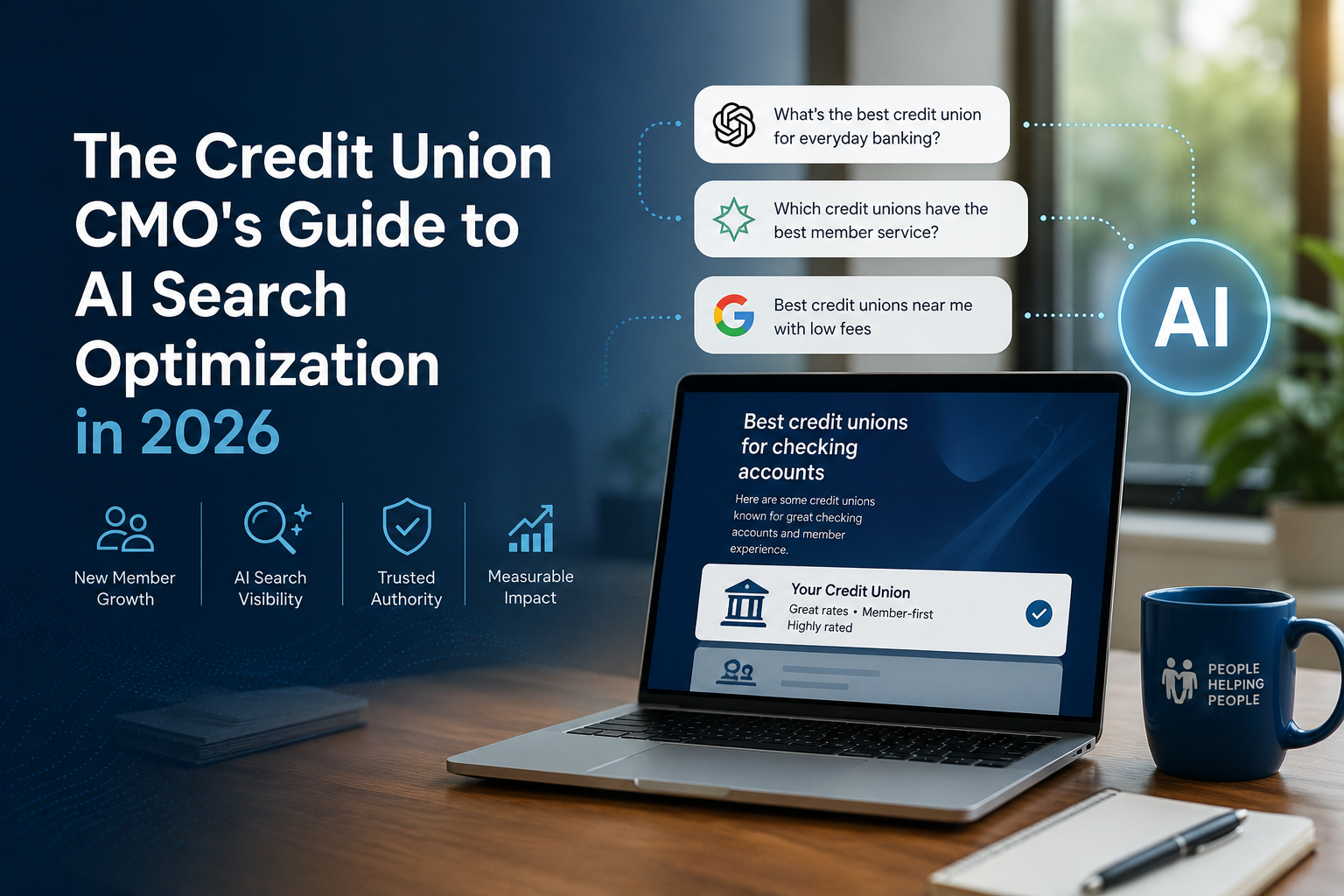
The Credit Union CMO's Guide to AI Search Optimization in 2026
62% of credit union executives now rank new member growth as a top-three concern — and the channel where that growth increasingly starts has fundamentally shifted. Prospective members are asking ChatGPT, Perplexity, and Google AI for financial guidance before they click a single link or visit a single website. For credit union CMOs, AI search optimization is no longer a technical SEO footnote — it's a member acquisition imperative. In this guide, we break down the four strategic pillars of credit union AI visibility, how to talk to your board about the investment, and the sequenced 90-day action plan your team can execute with the budget and capacity you actually have.
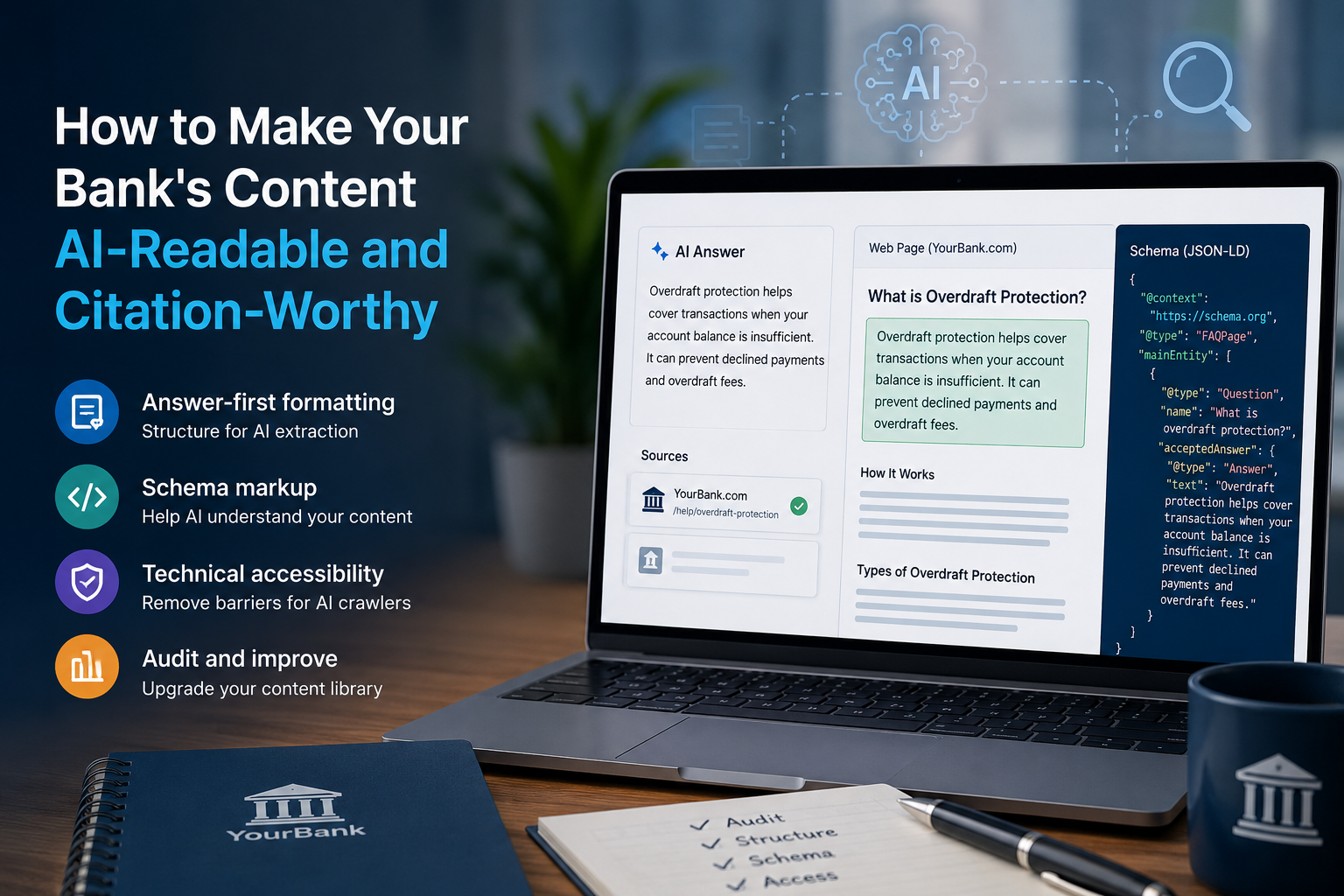
How to Make Your Bank's Content AI-Readable and Citation-Worthy
Your bank's content might be well-written, well-researched, and well-ranked on Google — and still be completely invisible to AI. The difference between content that gets cited and content that gets skipped isn't quality. It's structure. AI systems extract answers at the passage level, not the page level, which means every section of your financial content needs to stand alone as a complete, citable answer unit. In this guide, we break down the answer-first formatting principle, the schema markup types that drive citation, the technical barriers silently blocking AI crawlers, and how to audit and upgrade your existing content library without starting from scratch.
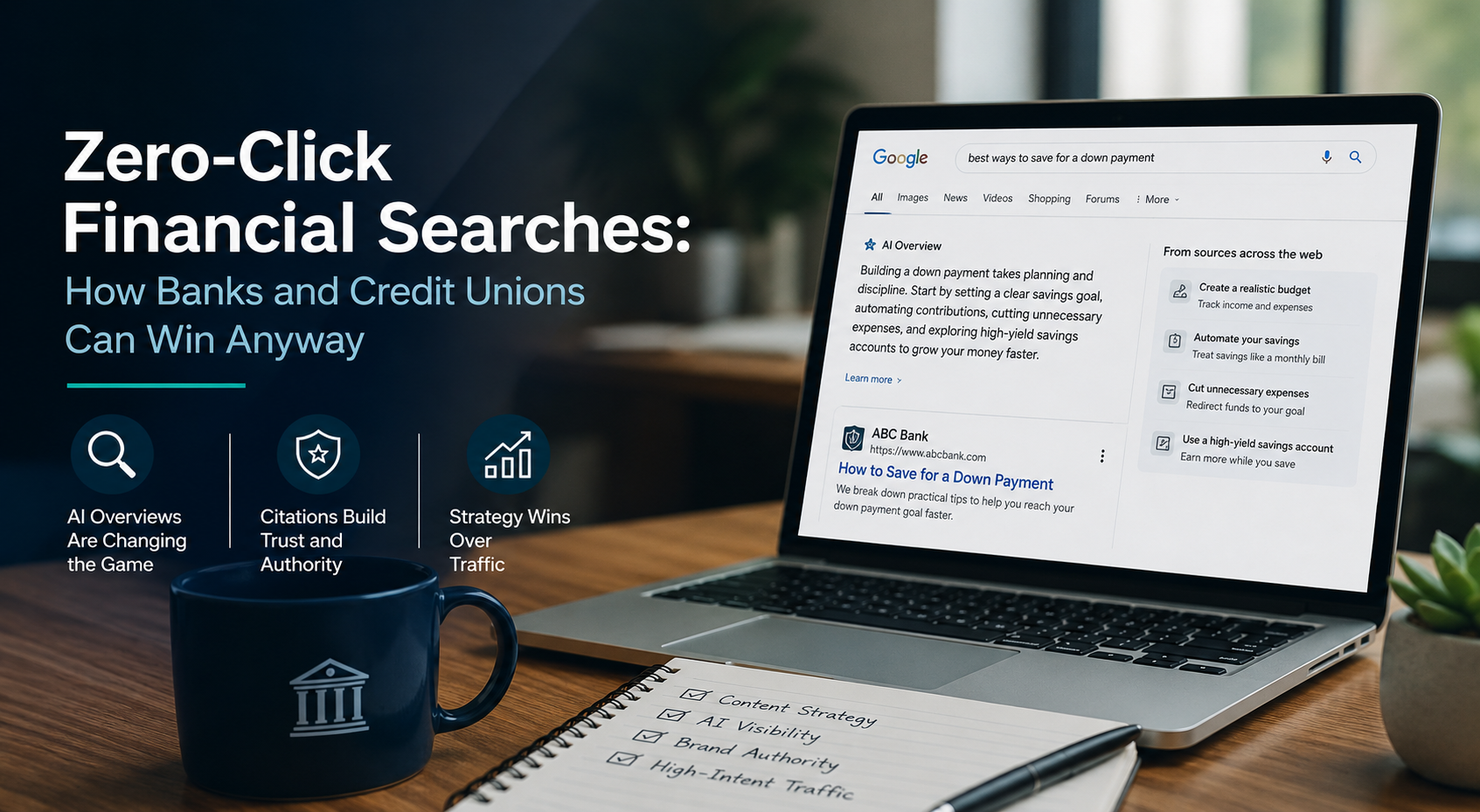
Zero-Click Financial Searches: How Banks and Credit Unions Can Win Anyway
For banks and credit unions, the zero-click era isn't a traffic problem — it's a strategy problem. Nearly 65% of all Google searches now end without a click, and financial queries are among the most susceptible to AI summarization. But zero-click doesn't mean zero influence. Institutions cited in AI Overviews and AI search answers are building brand authority, generating downstream branded searches, and attracting higher-intent visitors who convert at dramatically better rates than traditional organic traffic. In this post, we break down exactly which financial queries still drive clicks, which ones require a citation-first strategy, and how to build the split architecture that wins in both environments.

AI Search for Banks: How to Get Cited as a Trusted Financial Source
More than half of U.S. consumers now use AI to research financial institutions — and the shortlist they arrive at is built before they ever visit your website. For community banks and regional financial institutions, this shift creates both a serious threat and a real opportunity. AI systems hold financial content to the highest trust standards of any category, reward local specificity over national scale, and cite institutions whose authority is validated across multiple platforms. In this post, we break down exactly how each major AI model evaluates bank content differently, what YMYL compliance means for your content strategy, and the specific steps any community bank can take to become the trusted financial source AI recommends.
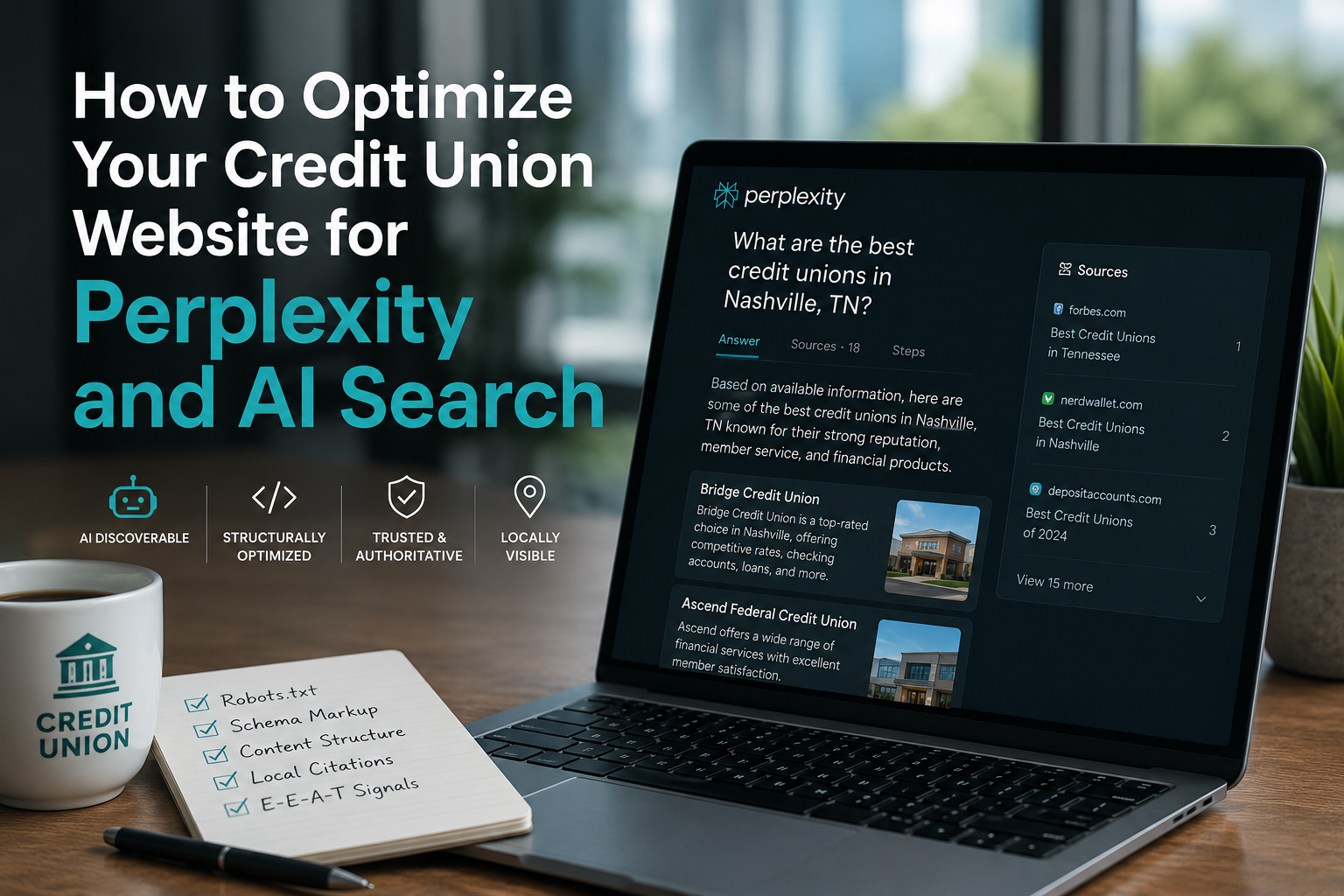
How to Optimize Your Credit Union Website for Perplexity and AI Search
Perplexity AI has 45 million monthly active users, processes hundreds of millions of queries a month, and skews heavily toward high-income, research-oriented professionals — exactly the kind of people who become credit union members. The problem is that most credit union websites are technically invisible to Perplexity's crawler, structurally incompatible with how AI extracts answers, and missing the off-site authority signals that determine who gets cited. In this guide, we break down every layer of Perplexity optimization — from robots.txt fixes and schema markup to content restructuring and local citation building — so your institution shows up when it matters most.
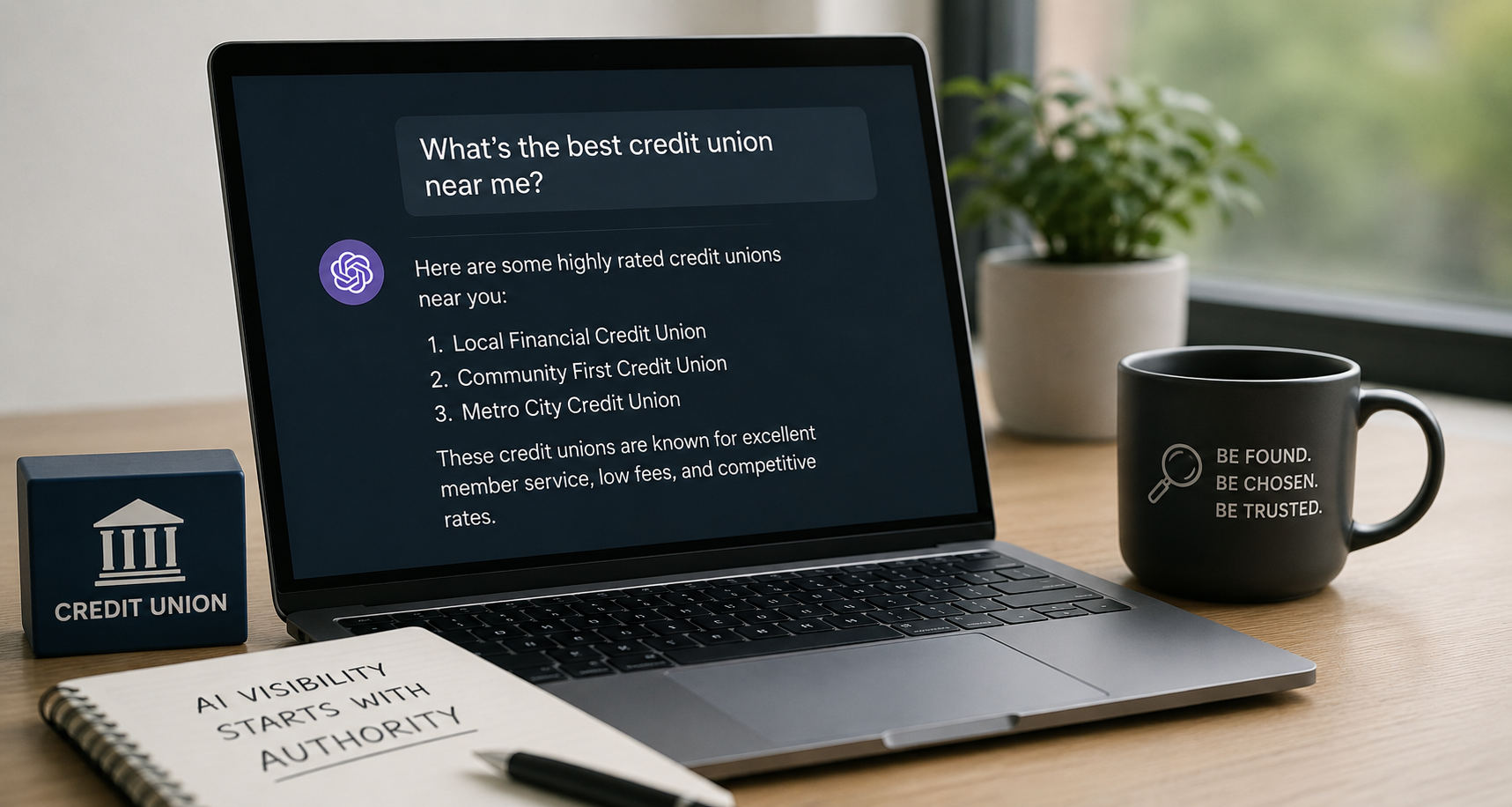
What ChatGPT Says When Someone Asks "What's the Best Credit Union Near Me?"
When a potential member types "what's the best credit union near me?" into ChatGPT, most credit unions don't show up — not because their products aren't competitive, but because AI has nothing concrete to cite about them. In this post, we break down exactly how ChatGPT decides which institutions to recommend, why 87% of AI citations on credit union queries come from third-party sources your institution doesn't control, and what specific content and authority signals you need to build to start appearing in the answers your next members are already getting.
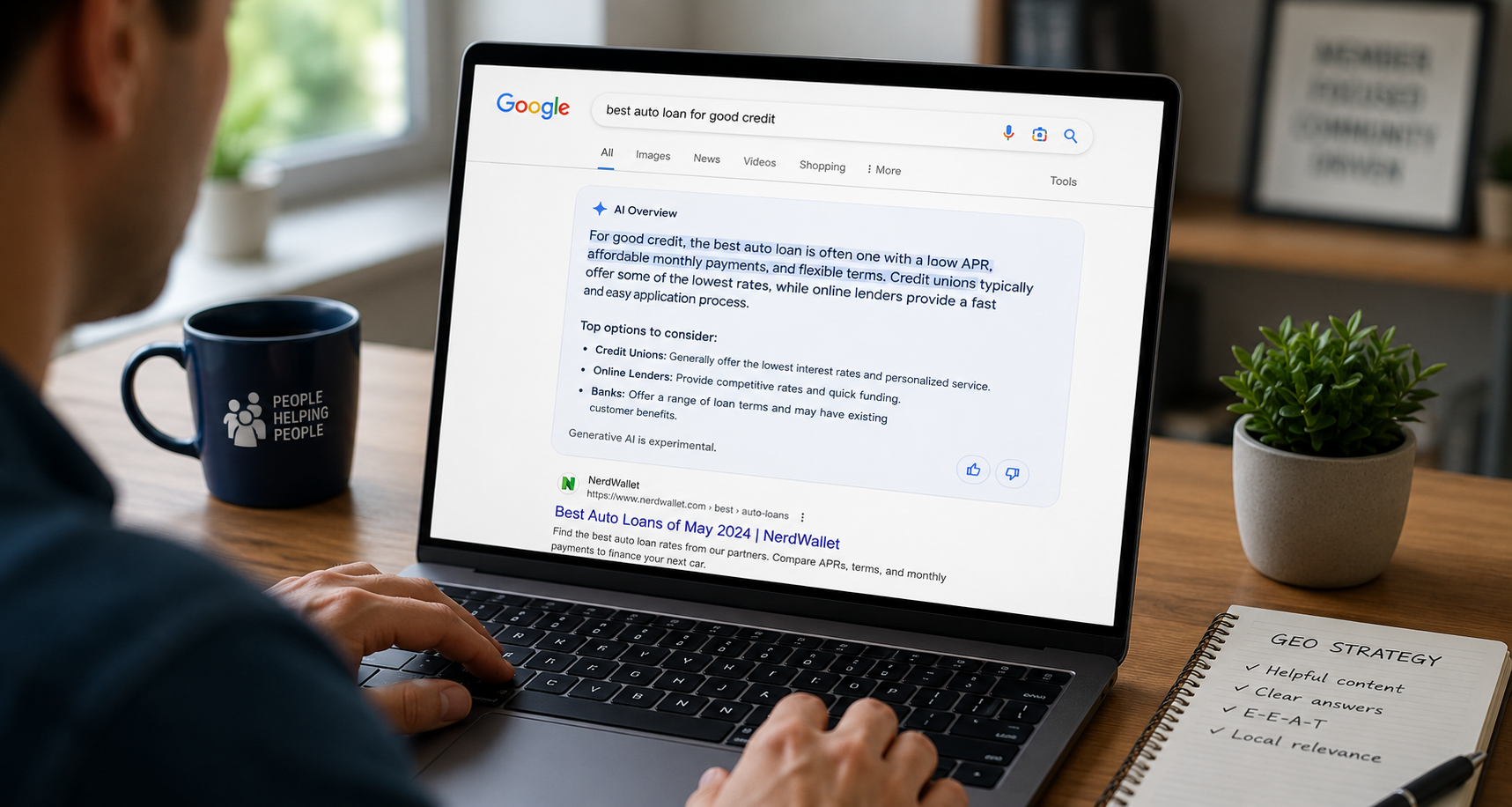
How AI Overviews Are Changing How Members Find Financial Products
When a potential member searches for an auto loan or a HELOC today, they may never see your website. Google's AI Overviews now answer financial questions directly on the search results page — no click required. For credit unions and community banks, this is one of the most significant shifts in member acquisition in a generation. In this post, we break down what AI Overviews mean for financial product discovery, why your paid search budget is already feeling the impact, and what a practical Generative Engine Optimization (GEO) strategy looks like for community financial institutions.
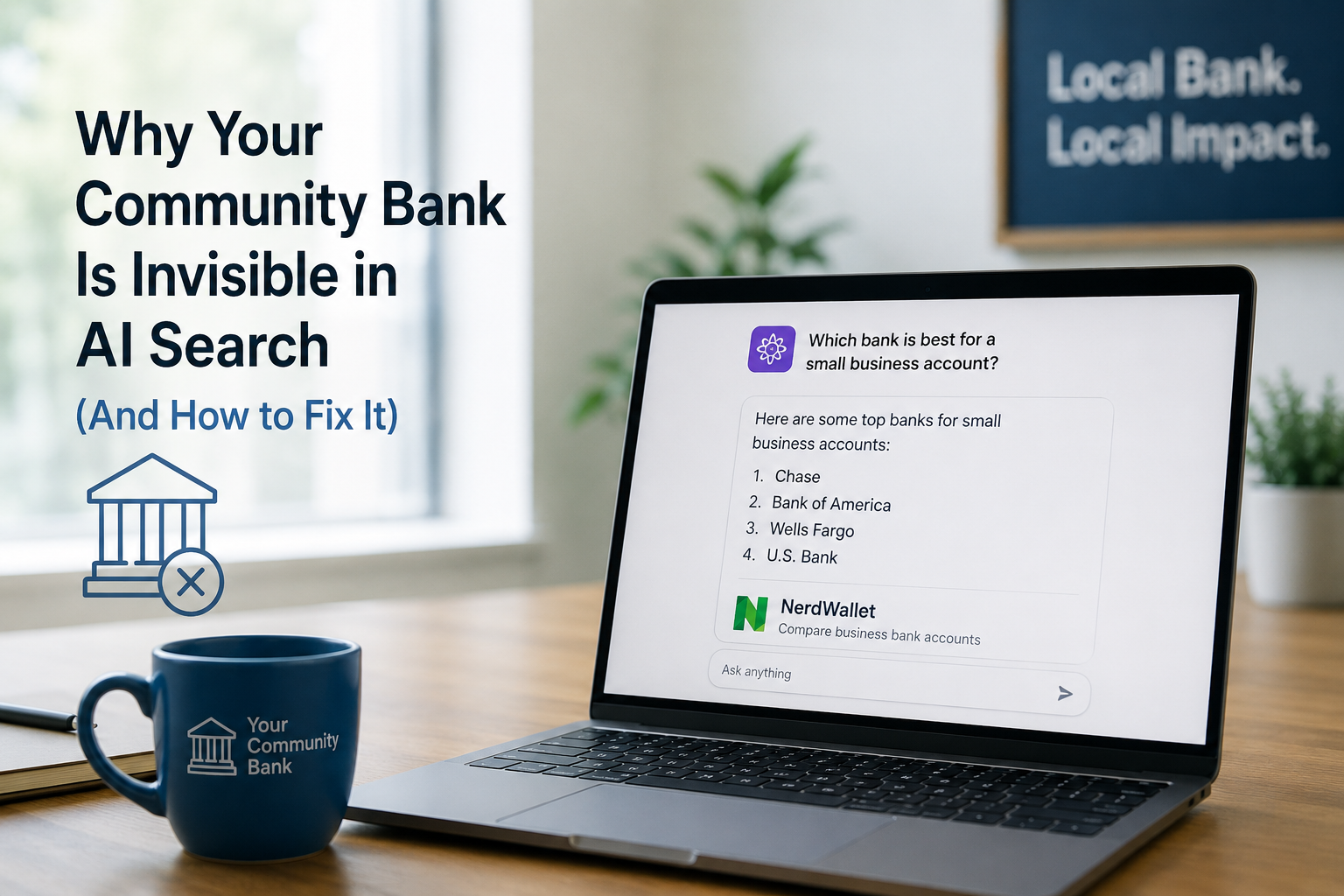
Why Your Community Bank Is Invisible in AI Search (And How to Fix It)
When a prospective customer asks ChatGPT which bank to use for a small business account, the answer almost certainly doesn't include your community bank. Research shows that fewer than 5% of AI financial recommendations mention community institutions — while NerdWallet appears in over 90% of responses and Chase shows up in roughly 75%. This isn't a quality problem. It's a structural one. This guide breaks down the seven specific reasons community banks are invisible in AI search right now, which platforms are most winnable, and the exact action plan to start appearing in the answers your prospective customers are already reading.
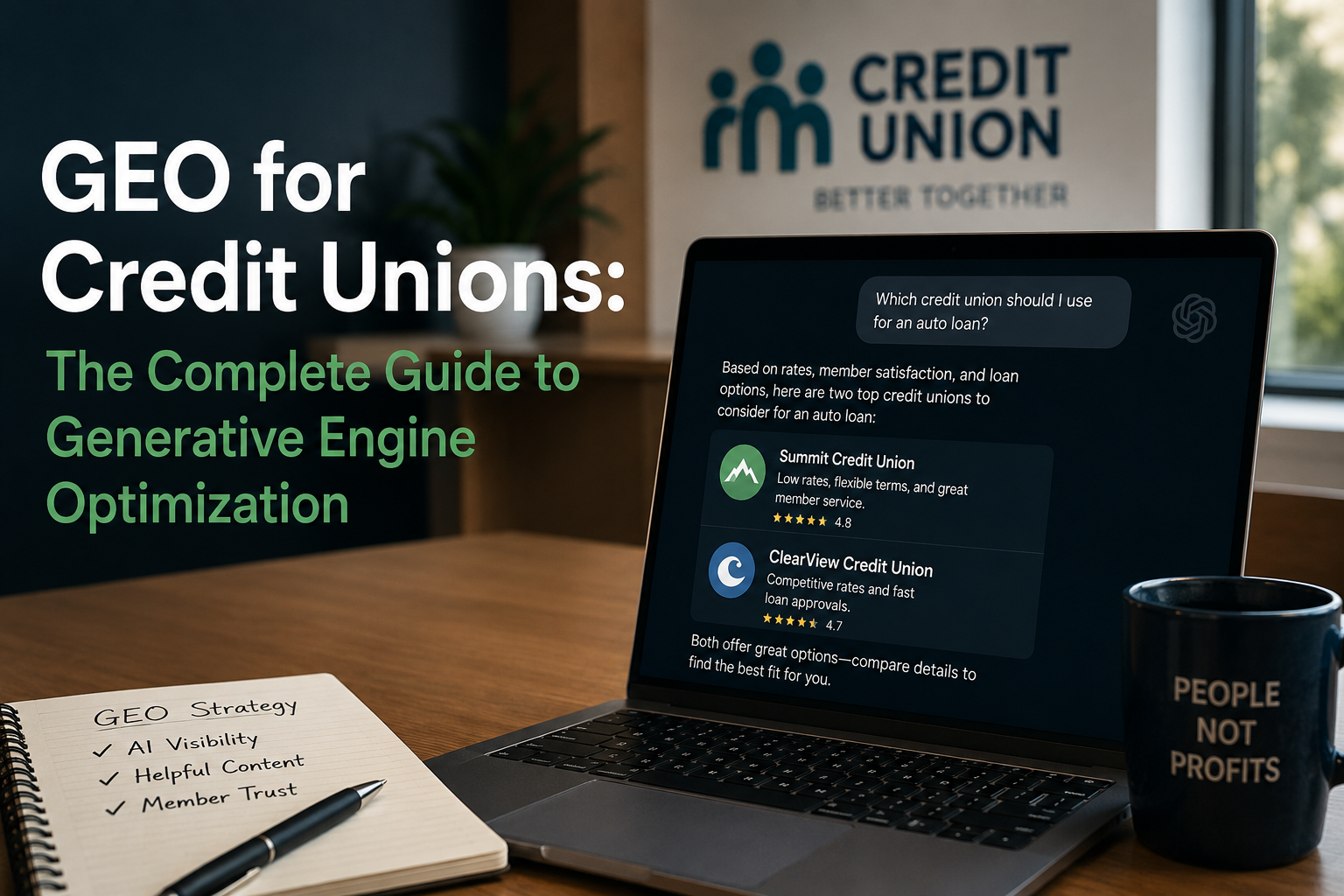
GEO for Credit Unions: The Complete Guide to Generative Engine Optimization
When a prospective member asks ChatGPT which credit union to use for an auto loan, the AI doesn't return ten links — it names two or three institutions and moves the user toward a decision. If your credit union isn't one of them, you lost a lead before you ever knew it existed. This complete guide breaks down exactly how generative engine optimization works for credit unions, why your existing content strategy may be working against you, and the nine specific strategies your marketing team can implement today to start appearing in the AI-generated answers your prospective members are already reading.
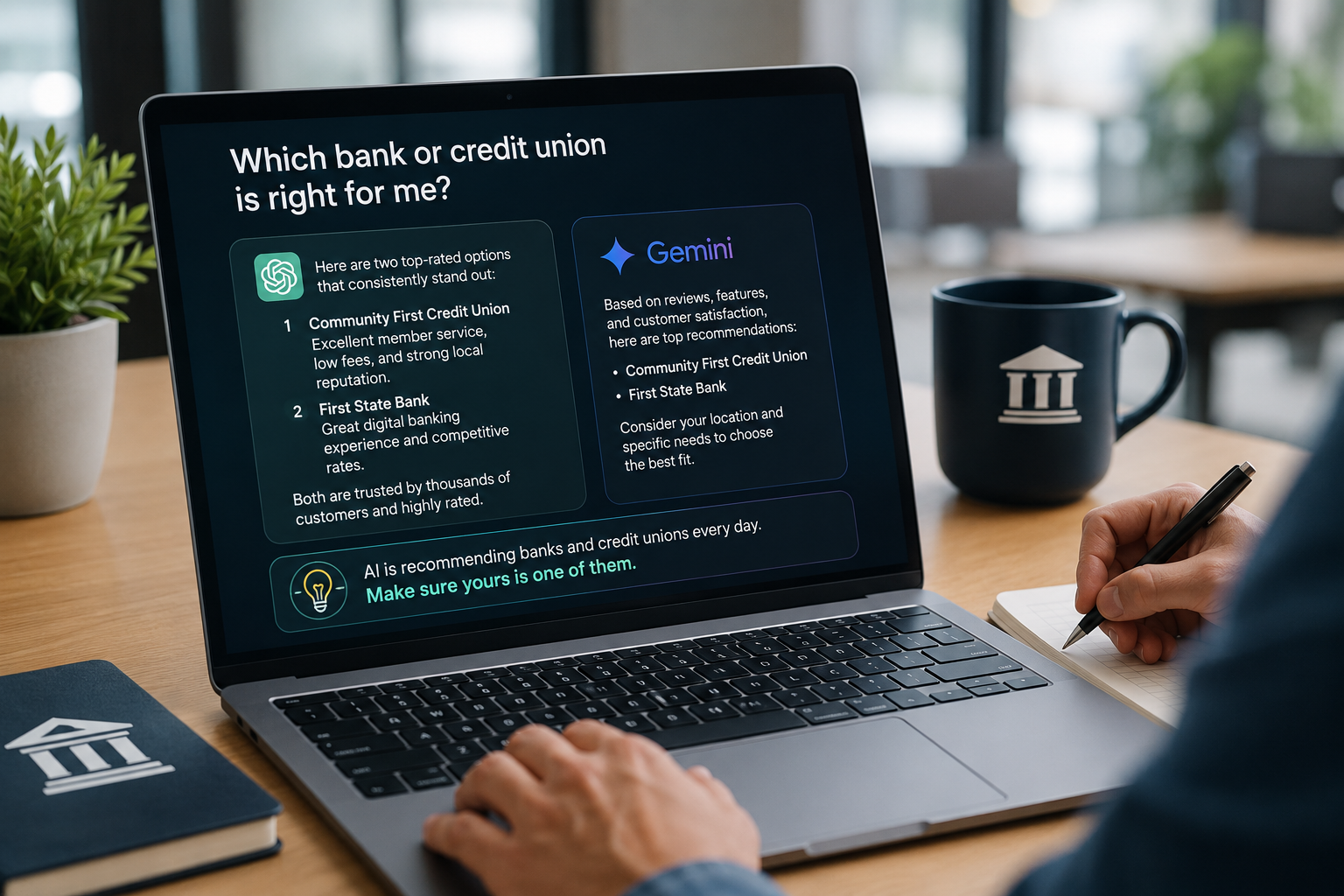
How to Get Your Bank or Credit Union Recommended by ChatGPT and Gemini
Nearly 60% of consumers now use AI for banking decisions — and when they ask ChatGPT or Gemini for a financial institution recommendation, only two or three institutions get named. If yours isn't one of them, you're losing leads you never knew existed. This guide breaks down exactly how AI search works for financial institutions, why traditional SEO isn't enough anymore, and the eight strategies your bank or credit union can implement today to start appearing in AI-generated answers.